

This chapter presents the principles that guide the policies of the Douglas County Comprehensive Plan. These First Principles are derived from a consideration of population demand, regional growth policies, and stakeholder input. They provide the guiding assumptions for the development concept and implementing systems presented in the plan’s subsequent chapters.
First Principles
- Douglas County will protect and steward the environment and natural resources. To do this the County should:
- Honor its unique natural heritage by preserving, expanding, and restoring remnant natural communities containing examples of its presettlement condition.
- Protect the quality and quantity of water resources, including remnant and restorable wetlands, surface waters, and groundwater.
- Encourage development that identifies and preserves important natural resources and takes advantage of these characteristics to add value.
- Encourage preservation of open space and natural resources through the development of water, bike, and pedestrian trails.
- The County will preserve and enhance the unique character of the County. To ensure this the County should:
- Conserve rural County character by guiding new development toward existing developments and requiring the use of low-impact development that preserves open spaces and natural resources.
- Direct new commercial developments toward existing municipal centers with full municipal (water, sewer, roads, etc.) services and avoid strip commercial development.
- Enhance the quality of development by creating unique, diverse, compact, and mixed-use developments rather than homogenous subdivisions. This may mean development occurs only when demand from Douglas County’s communities is able to support development.
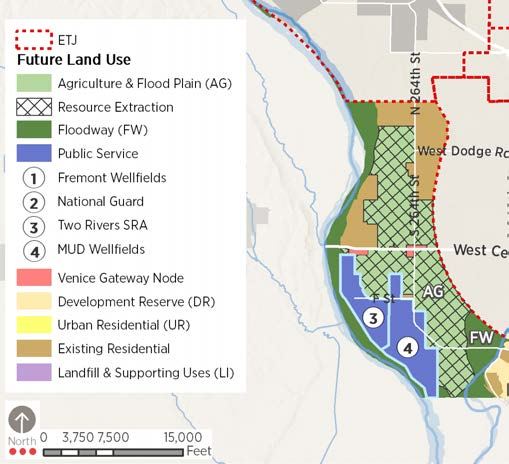
- Major development within the large floodplain of the Platte and Elkhorn Rivers will be limited to lake development around resource extraction sites if municipal services (water, sewer, roads, etc.) are provided. Floodplain land should remain in agricultural use emphasizing local food production/ urban agriculture and/or other compatible uses such as low-impact recreation, or habitat restoration.
Much of the remaining land within the County’s jurisdiction is located within the Platte and Elkhorn River floodplains. Development within these areas will likely be limited to lake developments around former sand and gravel operations, but only if centralized water and sewer services are provided. Developments will have to demonstrate limited intrusion into the floodplain and the negative effects of floodplain development. These effects include diversion of flood waters into areas that previously did not flood and increased levels and duration of floodwaters. In floodplain areas outside of resource extraction sites, development should occur at very low density, or land should remain in agricultural use, emphasizing local food production that has limited intrusion on the floodplain.
- Former resource extraction sites should incorporate recreation and habitat preservation.
Future changes to the landscape, such as resource extraction or open-space preservation, should include multiple end-use benefits such as low-impact recreation and habitat restoration. Front end planning of all resource extraction sites should identify end stage uses. These uses could include habitat preservation, and/or restoration, creation of diverse ecosystems, renewable energy, local food production, along with recreational and residential uses when appropriate. Recreational and residential uses will need to utilize centralized water and sewer services.
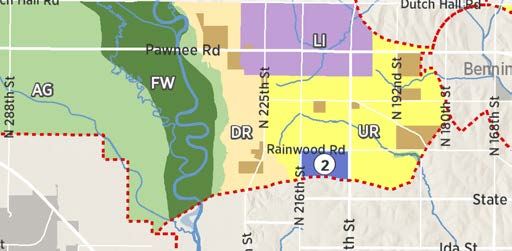
- Areas in Douglas County with urban services should be reserved for urban density development. Large lot acreage development (less than 6 units per acre) and developments that lack the design and density to serve transit are prohibited.
Remaining land in Douglas County within the Papillion Creek watershed, and hence within the Omaha urban services area, is an increasingly scarce and finite resource. Low density developments consume more land per unit, causing full build-out to occur in less time and are not sustainable from a property tax standpoint. Smart development principles demand efficient use of existing and future public infrastructure.
- Developments should incorporate innovative conservation development techniques.
In all new developments, the County will use conservation development practices, such as clustering of dwellings, open space requirements, protection of stream corridors, and integrated trail networks, to protect resources, minimize environmental impact, and provide recreational opportunities for residents.
- Stormwater management techniques should be tailored to the unique qualities of the major watersheds and should focus on good site design that minimizes stormwater runoff.
Within Douglas County there are two major watersheds, the Papillion Creek and the Platte/Elkhorn rivers, each with unique soils and features. The County should identify basic standards for stormwater management, with more specialized guidance specific to each watershed. These standards and policies must manage stormwater to protect streams and drainageways, and they must comply with federally-mandated stormwater permitting requirements. Stormwater should be treated as a resource, not a waste product, and handled on site using the natural landscape in combination with low impact development and green infrastructure stormwater management techniques. Drainage corridors should remain as green spaces and should be incorporated into stormwater management.
- Wastewater will be treated using existing regional plants.
Individual septic systems will no longer be allowed in areas serviceable by municipal systems or centralized water and sewer systems.
- Within all new developments reservation of a specific percentage of open space will be required.
The County will establish protected open spaces to minimize environmental and aesthetic impacts and around which development can be directed. The open space should be accessible to the public and not isolated behind dwellings. These areas should be viewed as integral features of the development - assets that create higher quality and value by preserving open space. They contribute directly to stormwater management and preservation of natural features and resources and can also provide other benefits.
- Significant drainageways within the County should remain as green spaces that are incorporated into storm water management.
Open land resources should be interconnected into a continuous network, preserving the character of the land more effectively than isolated patches of open space. A web of open spaces provides greater opportunities for recreation. These corridors and open space buffers can also supplement on-site stormwater management, provide for habitat corridors, and potentially allow for local food production. To improve these corridors, new developments should align proposed open spaces with those in adjacent developments.
- Local transportation systems should provide continuity between developments.
A good transportation system keeps developments connected while routing heavy regional traffic around residential developments. It ensures a continuum of streets, including half- and quarter-section line collectors that serve local traffic needs without requiring drivers to use arterials. Street design should be in coordination with the County Engineer’s office and should use techniques that produce traffic speeds that conform to surrounding land use and safety conditions.
- Major transportation corridors should be multi-modal and incorporate green street elements.
A completely auto-dependent development pattern limits access for such groups as young people, seniors, and any other persons without or with limited access to a personal vehicle. Techniques allowing residents to move more freely include better coordination of land use with transportation, multi-modal streets that accommodate all forms of transportation, and greater connectivity within the road network. The road system should also be designed to preserve the rural character of the County including landscaping and buffering of arterial and collector streets. Public transit options should be provided along designated corridors if sidewalks, trails, and sites are designed in ways that safely connect destinations (homes and jobs) to the corridors.
- Open space, streams, and trails should be integrated into the design of new residential developments.
Development in the County will integrate special features such as local wetlands, bluff and ravine complexes, and riparian corridors into development design. Full urban development of an area does not mean monotony. New developments will utilize the unique character of the County both to preserve existing landscapes and to create interesting and exciting environments.
- County assessments should encourage conservation easements in resource conservation areas.
Under current conservation easement legislation, landowners can receive significant federal tax incentives for the establishment of easements. These easement areas may include, but not be limited to, native prairies, wetlands, steep slopes and areas within viewsheds. Douglas County encourages preservation of environmentally sensitive areas which will also further the stormwater management objectives of the County.
- Developments within Douglas County should incorporate a variety of housing types that provide a range of housing choices.
Douglas County should work in concert with its municipalities to make available a variety of housing choices and to encourage the extension of transit options to western Douglas County to connect people with jobs.
- Land use policies and regulations should protect groundwater.
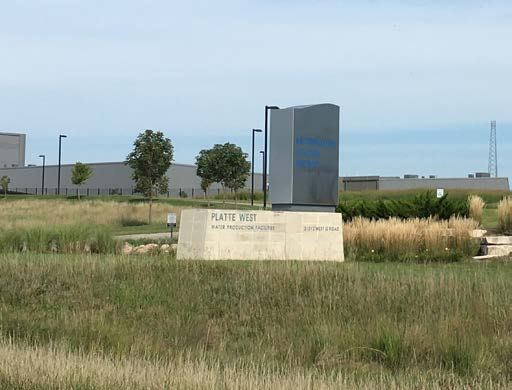
There is a high-water table in much of the County’s jurisdiction with large numbers of private and public wells. Land use policies should guide higher intensity uses away from these areas. Regulations should encourage the use of community wells and policies should discourage the expansion of small-scale scattered private wells for domestic purposes.
- Land use policies and regulations should encourage and support local food production.
Local food production and urban agriculture is becoming more important as consumers are becoming more conscious of where their food is coming from and communities seek ways to address food deserts. This use should be encouraged in the County, especially in the Agriculture district.
- The County should support efforts to increase energy efficiency.
Energy efficiency can be an important economic development and environmental policy. Greater energy efficiency reduces business overhead, freeing capital to invest in business growth. Energy-efficient housing reduces cost of living for residents, improving housing affordability, disposable income, and quality of life. The County should continue to implement the International Energy Conservation Code (IECC).
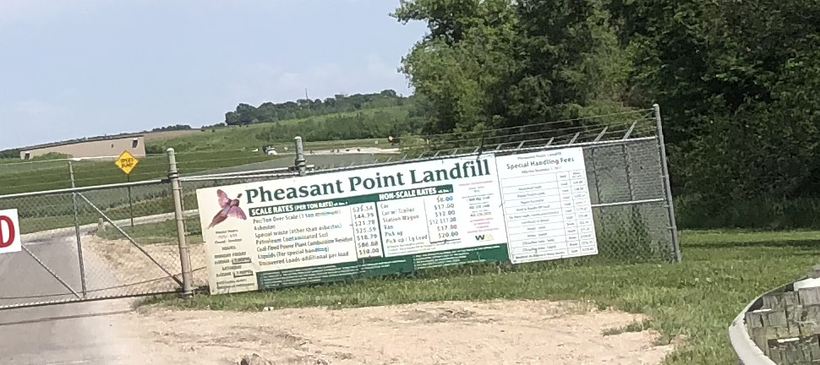
- The County should partner with local municipalities to identify ways to reduce waste generation and to recover the resource value from the waste stream.
The County supports the “waste hierarchy” concept of solid waste, to include:
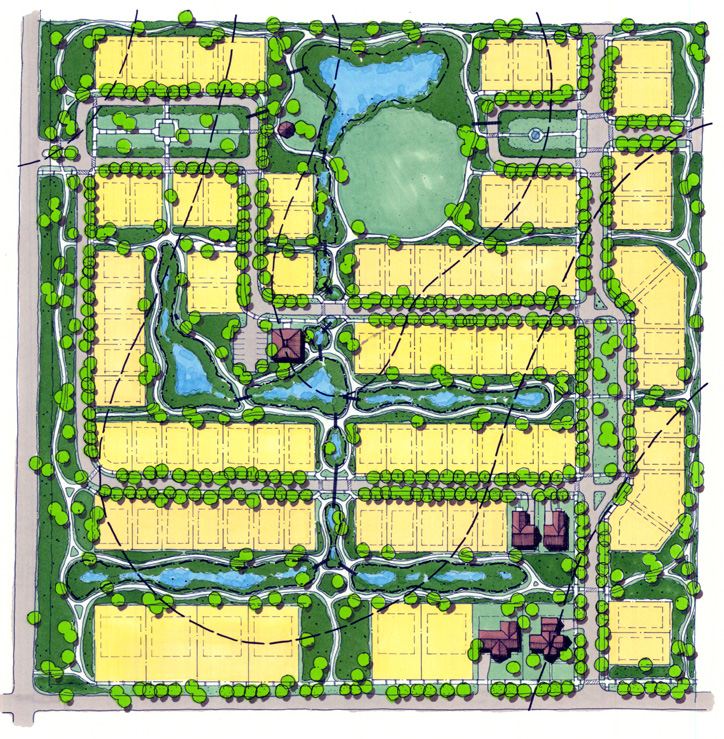
Example conservation subdivision (see Appendix B)

- Education efforts that identify ways to reduce the amount of waste generated so that it does not have to be “managed” in the first place.
- Recycling and reuse efforts, including composting, so that resources in the waste stream are utilized to the maximum extent practicable.
- Landfilling what cannot be recycled or reused from the waste stream.
Potential strategies may include:
- Solid waste education, based on the waste hierarchy priorities. This will require identifying a sustainable funding source that is not reliant on property taxes.
- Identifying and supporting recycling and/ or composting operations that can assist local businesses and encourage economic development. The new businesses would then help to offset the loss of County landfill revenue due to waste diversion.
- Identifying local markets for the reuse of waste materials. By developing local markets fluctuations in waste material commodity prices and transportation expenses are minimized.
Energy Element
Beginning in 2015 all comprehensive plans in Nebraska must contain an energy element. This includes identification of specific goals related to energy and energy reduction. Appendix C includes specific discussions with stakeholders and survey questions regarding energy consumption and use of resources. Around these responses the First Principles in this chapter were modified or developed. Principles that will lower or at least maintain the level of resource use include:
- 5. Areas in Douglas County with urban services should be reserved for urban density development.
- 8. Wastewater will be treated using existing regional plants or alternative treatment methods in all serviceable areas.
- 11. Local transportation systems should provide continuity between developments.
- 12. Major transportation corridors should be multi-modal and incorporate green street elements
- 15. Developments within Douglas County should incorporate a variety of housing types that provide a range of housing choices.
- 17. Land use policies and regulations should encourage and support local food production.
- 18. The County should support efforts to increase energy efficiency.
- 19. The County should partner with local municipalities to identify ways to reduce waste generation and to recover the resource value from the waste stream.
Appendix A provides an overview of energy infrastructure, use by sector, short- and long-term strategies, renewable energy sources, and state programs that may apply in Douglas County.